Can Scars Really Be Removed? What Is the Best Scar Treatment for Me?

Hello,
This is Dr. Soyoon Park from Cheongdam Eclat de Clinic, where we help you achieve radiant skin.
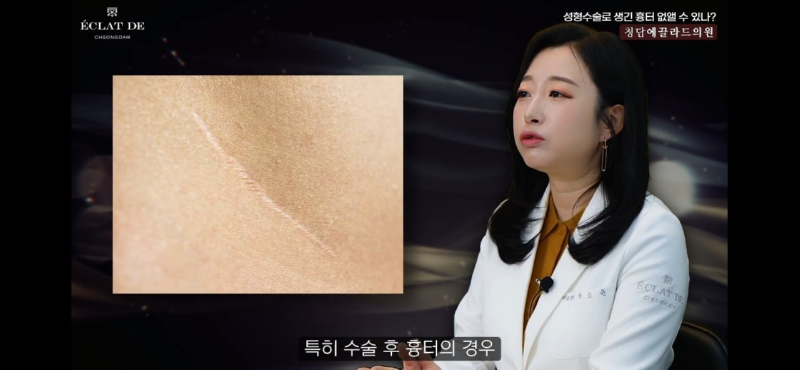
Over the past 10 years of practice, I have followed many patients for long periods of time through the relationship built between doctor and patient.
Especially in cases of post-surgical scars where revision surgery is difficult or risky, treatments such as lasers or injections are often considered.
Personally, I have treated many scar cases over the years.
Everyone experiences some form of scarring in life.
Even I have scars that still make me feel uncomfortable whenever I see them.
And if the scar was caused by cosmetic surgery, I believe the emotional stress can feel even greater.
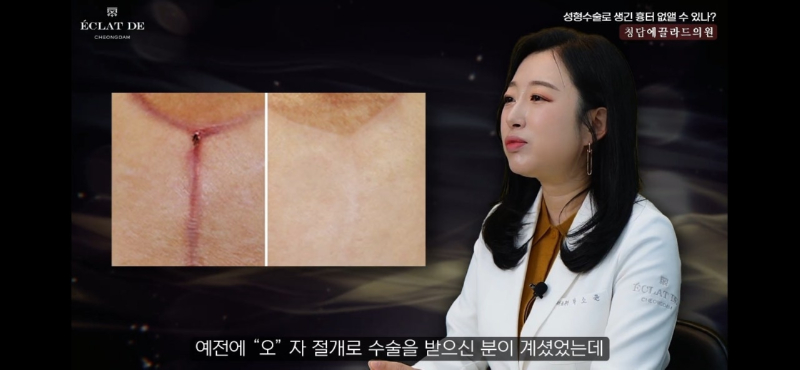
There was once a patient who had surgery using an “O-shaped incision.”
In cases like this, visible scars are usually unavoidable and correction is not easy.

However, after discussing carefully with the patient, we continued treatment for nearly a year.
The scar improved dramatically,
and even the original surgeon was reportedly surprised after seeing the results and asked where and how the scar had been treated.


In my opinion, successful scar treatment depends on three important things:
the patient’s belief that improvement is possible,
consistent treatment,
and the doctor’s attention to detail and persistence.
Types of Scar Treatments & Their Pros and Cons
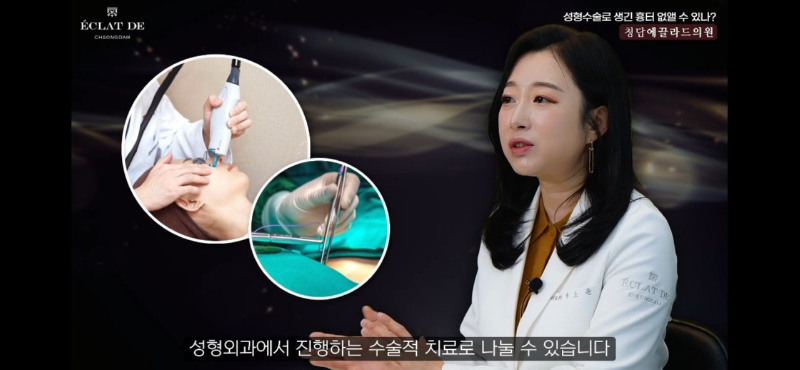
The main goals of scar treatment are cosmetic improvement and restoring confidence.
Scar treatment can generally be divided into:
laser treatments performed in dermatology clinics,
and surgical treatments performed in plastic surgery clinics.
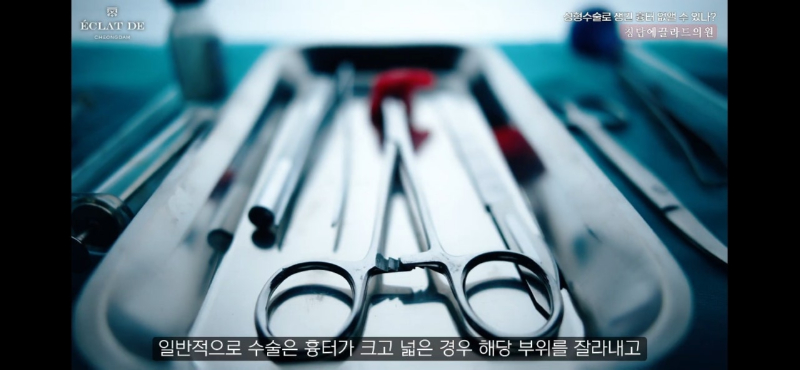
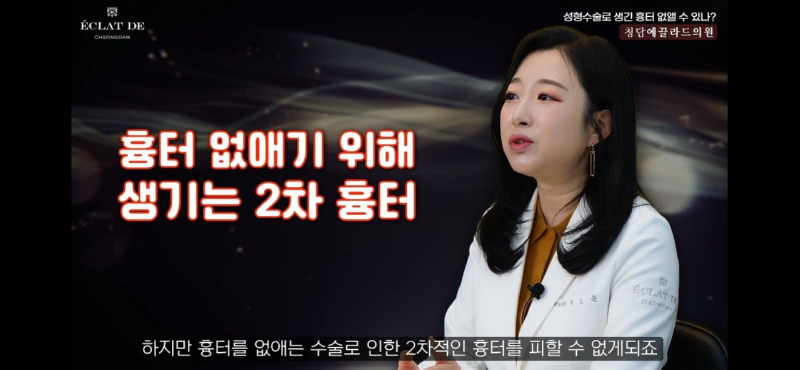
Each treatment has advantages and disadvantages,
which is why many people struggle to decide whether surgery or laser treatment is better.
Generally, surgery is chosen for large or wide scars.
The scar tissue may be removed and stitched,
or skin grafting may be performed if necessary.
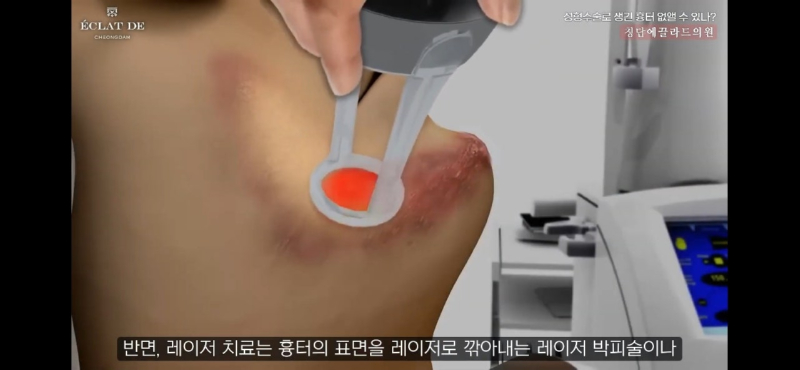
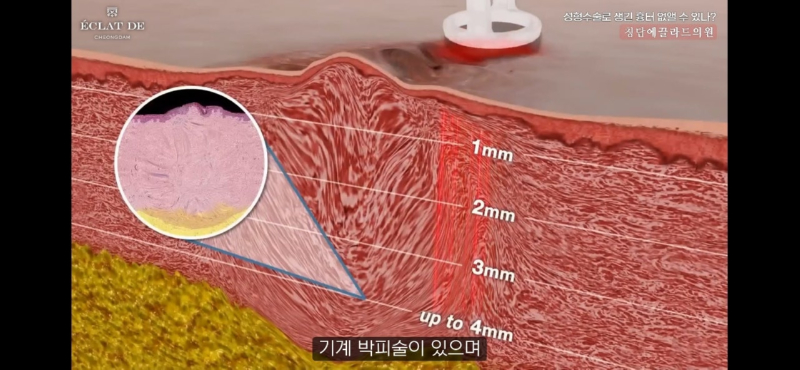
On the other hand, laser treatments include resurfacing lasers and mechanical dermabrasion that smooth the scar surface.
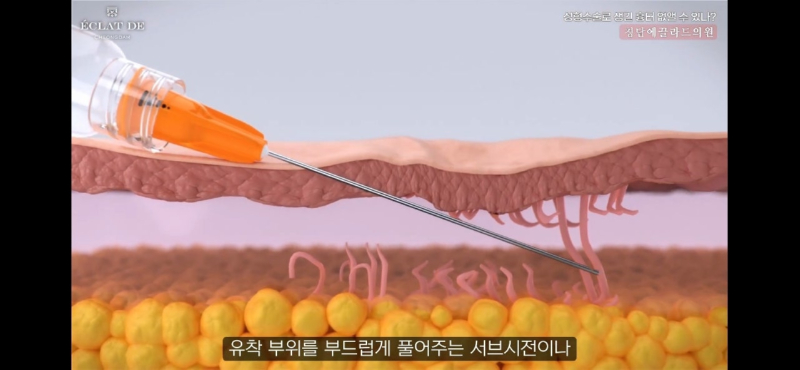
Subcision treatments help release scar adhesions beneath the skin,
while procedures such as Air Dissector and XCARA based on similar principles may create synergy effects when combined with Fraxel.
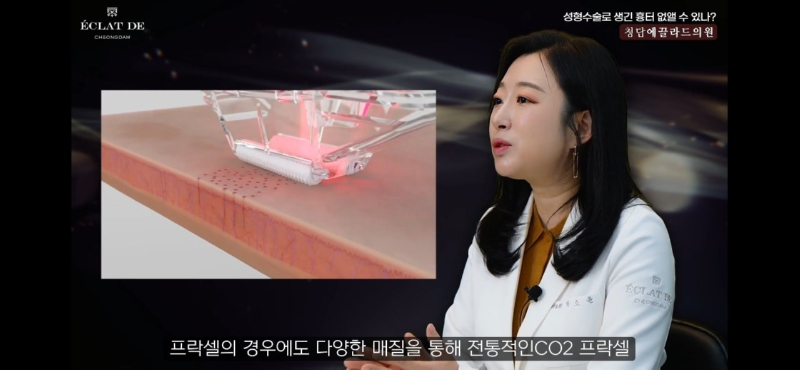
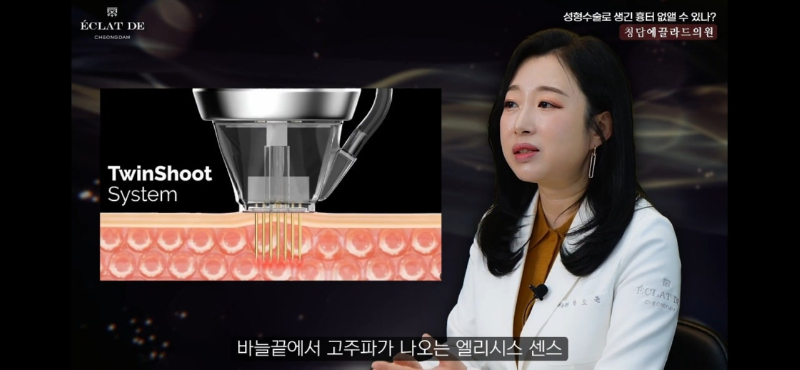
Even Fraxel itself now has many different technologies available,
including traditional CO2 Fraxel,
Elisys Sense using radiofrequency microneedles,
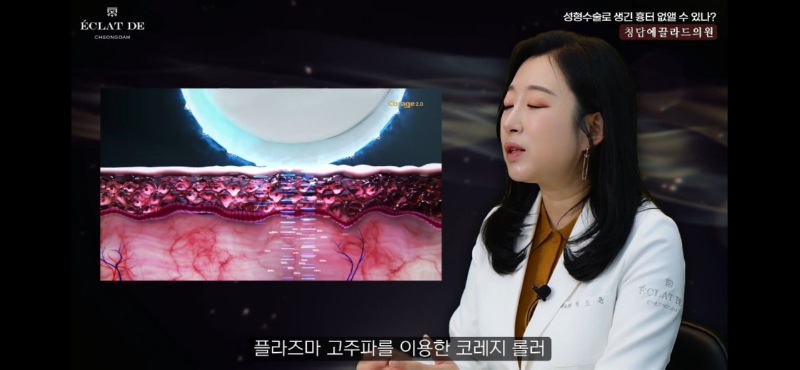
Corage Roller using plasma radiofrequency,
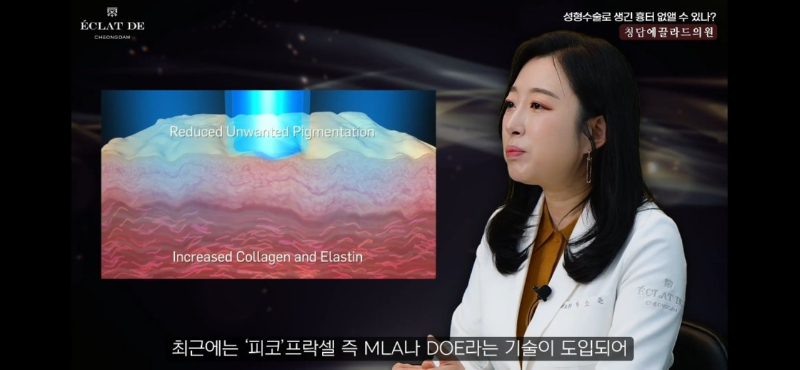
and newer Pico Fraxel technologies such as MLA and DOE.
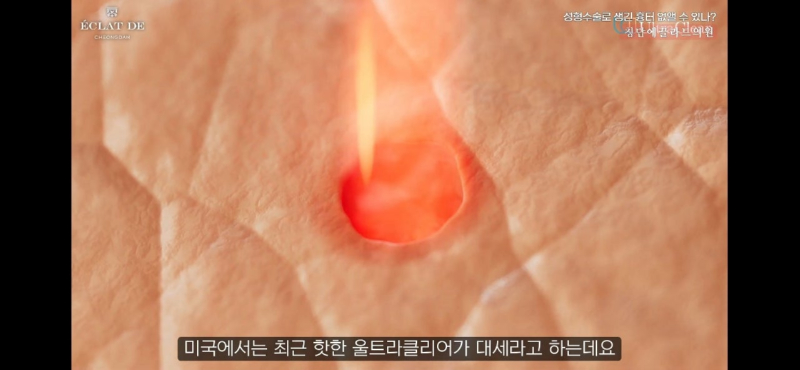
Pico laser treatments create microscopic holes in the skin to stimulate regeneration and improve scars.


Recently in the United States,
UltraClear has become a very popular scar laser treatment.
New technologies such as “3 Day Miracle” and “Laser Coring,” which are not yet widely introduced in Korea,
are frequently discussed at medical conferences,
suggesting that scar treatment technology may continue advancing rapidly.
For red scars, vascular lasers may help,
while pigmentation-related scars may improve with treatments such as Pico Toning Laser.
Customized Treatment Depending on Scar Shape & Size
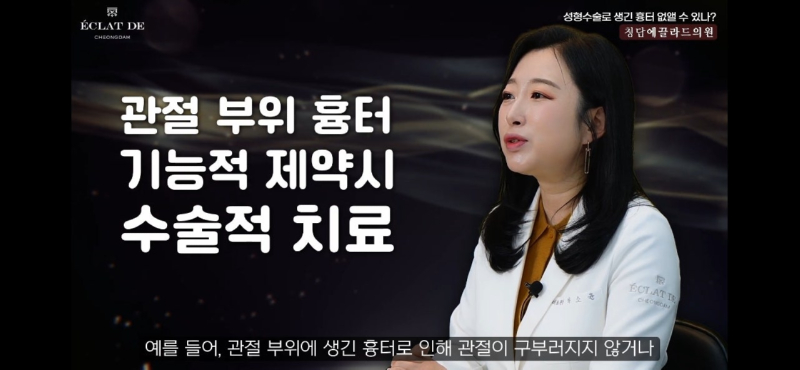
The most suitable scar treatment depends on the scar’s shape and size.
For example,
if a scar around a joint limits movement or prevents proper bending,
surgical treatment usually becomes the priority.

However,
if movement is normal and the goal is mainly improving skin texture or color,
laser treatment may be more effective.
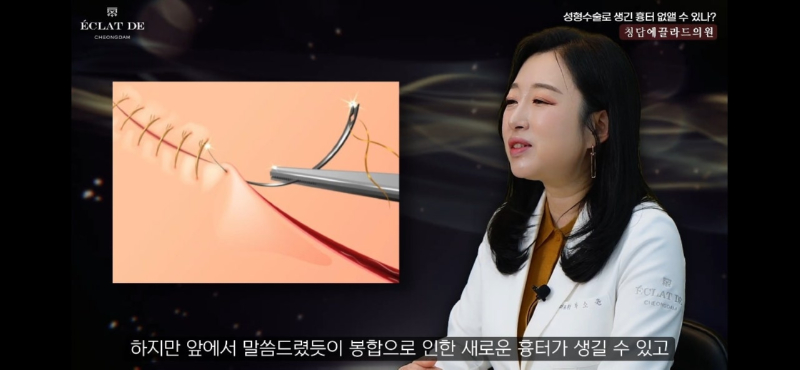
One advantage of scar surgery is that large scars may improve significantly after a single procedure.
However,
as mentioned earlier,
new scars may form from the stitches themselves,
and sometimes the new scar can even become larger or longer than the original.

In large scar cases,
skin grafting from another area may also be necessary.
In such cases,
the color and texture difference between the grafted skin and surrounding skin may remain noticeable.
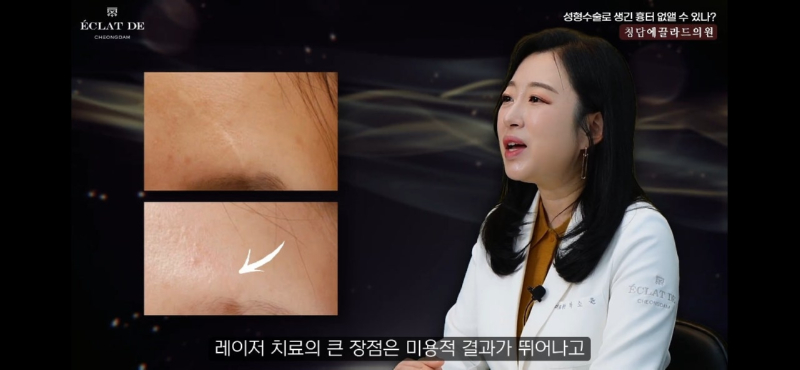
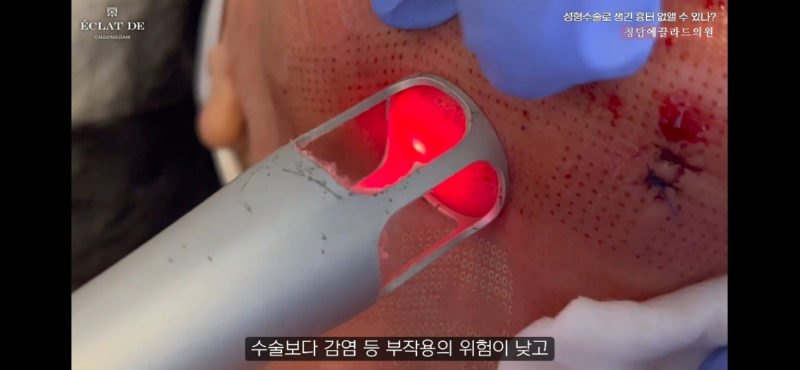
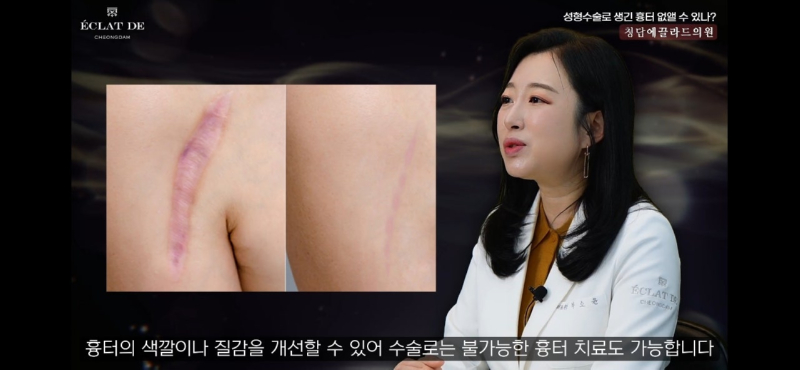
One major advantage of laser treatment is that cosmetic results are often very natural without creating additional scars.
Compared to surgery,
there is generally a lower risk of side effects such as infection.
Laser treatment can improve scar color and texture,
including cases that are difficult to improve surgically.

However,
one disadvantage is that complete improvement usually cannot be achieved in a single session.
Laser treatments work gradually over multiple sessions,
slowly improving the scar over time.
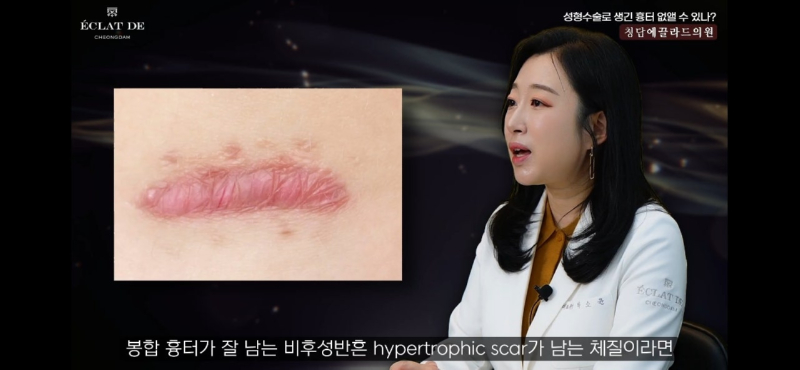
Many people feel stressed about scars remaining after cosmetic surgery.
If someone naturally develops hypertrophic scars easily,
repeat surgeries may lead to similar or even worse scarring.

For example,
if someone scars easily after double eyelid surgery,
additional surgeries may worsen the scar further.
In such cases,
laser treatment may be a more suitable option.

As you can see,
successful scar improvement requires personalized treatment based on accurate diagnosis of each individual’s skin type and condition.
Professional consultation is extremely important in finding the treatment most suitable for you.

Today, we discussed both surgical scar treatments and laser scar treatments.
If you have any questions about today’s topic,
please leave a comment or contact Cheongdam Eclat de Clinic through our KakaoTalk channel.
We will sincerely answer your questions.

Thank you,
and we’ll see you again in the next video.
youtube Video Link:
#ScarTreatment #AcneScar #LaserTreatment #Fraxel #PicoLaser #SkinResurfacing #ScarRemoval #KBeauty #SkinClinic #AntiScar #SkinRegeneration #Ultraclear #CorageRoller #ElisysSense #Cheongdam #Eclatde #Dermatology #SkinCare #BeautyClinic #HealthySkin